
Before humans even created cities or wrote books in the past, they produced sounds. The ancient people of the past clapped their hands and played bone flutes in order to express their most intimate feelings. In the present it is evident that the importance of music to Human Culture is just as important. It's not only an entertainment for the casual crowd but it's the worldwide heartbeat. Why is rhythm able to exert such a powerful influence on us? What is the significance of music to human society? The answer lies in the ways that melody creates our communities, helps us preserve our heritage as well as alters our daily decisions. In the end, the profound role of music in human culture shows that music can be a vital force that draws people from all walks of life.
Why Is Music Important in Human Culture?
The music industry is the life force of our globe. It functions as a bridge connecting people with totally different cultures. Although you may not comprehend the lyrics in a song that is not your own You can experience its sadness, joy or frustration. The unique relation between culture and music is proof that people share similar feelings regardless of their location.
Every group that exists on Earth utilizes sound to help pass through time. Before the invention of papers to make books and sung long tales to educate children about their past ancestors. Old songs convey traditional wisdom, deep convictions as well as lessons from the historical past. Without these songs the incredible events of history are now lost to history.
"Music can be described as the most universal and common language spoken by all people." -- Henry Wadsworth Longfellow
The True Role Of Music In Human Culture
As we examine the historic history of mankind it is clear that musical music is not intended for entertainment only. They're a source of our social expansion. Sound can be a unique force to transform our common values, and to build deep confidence. Here's a comprehensive review of how music shapes the way we live our lives.
Read also: 10 Amazing Benefits Of Listening To Music Daily for Your Health
Top 10 Role Of Music In Human Culture
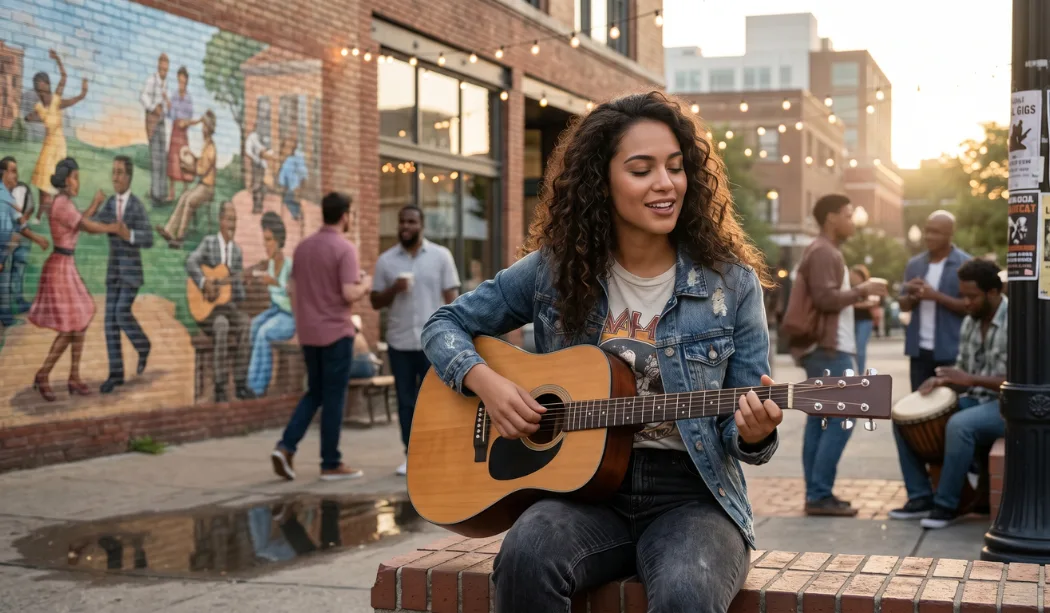
In order to understand the vast effect of music in the culture and society it is possible to reduce its primary functions into ten main areas:
- Social Bonding: Singing with others gives a sense of trust and unity among the group.
- Emotional Expression allows people share their feelings in a way that ordinary words do not suffice.
- Historic Preservation: The songs of the past are used as oral history documents to be passed on to future generations.
- Holy Rituals: The sound forms the basis of religious events and gatherings of religious significance around the world.
- Baby Development: Lullabies can help infants feel at ease while they develop their brains to develop.
- Health and Wellness: Healthy rhythms may reduce stress in the body and ease anxiety.
- Social Change: Anti-war anthems unite people to take on unjust laws.
- National Pride: National anthems bring together millions of people in a common tune.
- Culture Celebration: Musical tunes provide energy and excitement to harvests, weddings and birthday celebrations.
- Innovative Innovation through Creative Mixing: Mixing up new beats fuels the ever-growing development of the art world.
How Does Music Affect Human Behavior?
Did you notice how the speed of a music instantly gets you to dance? What about how a slower tranquil tune makes one feel relaxed following a long day? It happens because our brain naturally has a neural structure that is wired to follow the rhythm of music. The effect of music's influence on human behaviour are powerful and instantaneous.
If you are listening to your favourite energetic tracks the brain releases an endocrine chemical known as dopamine. The chemical causes you to feel cheerful and enthusiastic. Studies have shown that high beats can actually increase the heart rate while the slow beats relax the nervous system. The directly effect of music on the development of culture influences how people interact as they work, live, and interact each day.
Looking At Real Music Culture Examples
To witness this effect within the actual world it is possible to look at certain instances of music and culture all over the world. Every unique culture shows that the music of a particular region is a reflection of the culture and lifestyle of the people who live there.
| Culture / Region | Traditional Sound Style | Core Social Purpose |
| West Africa | Djembe Drumming | The power of storytelling in the community and tribal unification |
| Inuit Regions | Throat Singing | Fun games, as well as the natural imitator |
| India | Classical Ragas | Meditation on the spiritual and holiday celebrations |
| Appalachia (USA) | Bluegrass Ballads | The sharing of family histories and everyday struggles |
The Deep Significance Of Music In Different Cultures
The incredible significance of music across various societies lets us know the things that local residents value the most. In the majority of Native American tribes, the drum beat is the symbol of the beating heart of Mother Earth. Musicians make use of this sound to demonstrate reverence for nature in their rituals of worship.
Traditional sound is highly complicated and structured. The design is a reflection of a culture's appreciation for deep math as well as philosophy and exact arts. When you pay attention to the unique instruments of a particular community You can quickly find out what their interests are most.
The Role Of Traditional Music In Cultural Identity
The roots of our family are tied to traditional folk songs from the region. The significance of traditional music in defining our cultural identity is as a family symbol. If someone moves across the globe and return home, they bring along their ancestral instruments with them.
The old tunes they sing help people feel at home. It helps them remember their identity and the place they are from. This keeps their distinctive traditions alive in the new country, making sure that the old traditions don't disappear.
Music in Cultural Celebrations
Imagine a grand event or celebration without music? You'd feel empty! Making use of music during cultural events adds life, color and energy to the most joyful moments of our lives.
At harvest time or during colorful New Year parties, shared dancing brings the whole neighborhood to one another. These moments of joy create wonderful memories that bind families for many years. The sound transforms an ordinary room into a beautiful place filled with pure human interaction.
The Heavy Effects Of Music On Cultural Identity
If a particular community has an acoustic style and music, it creates a cover around their heritage. The longer-term impact of culture through music aid minority groups to remain resilient in difficult situations.
It is evident that oppressed or oppressed people used secret messages to plot their way to freedom. The songs they shared gave their minds a tremendous amount of mental energy as well as a sense of hope and courage. the ability to speak with one another, without getting found.
The Clear Impact Of Globalization On Music Culture
The modern age changes the global art in a rapid manner. The effect of globalization and music is not without its good as well as negative aspects. The bright side is that artists from India is able to combine traditional sitar music along with contemporary electronic music that come from New York. The result is exciting new forms of art.
But some experts believe that the popularity of pop music from around the world could obliterate smaller local, traditional styles. If the young population only listens to the biggest internet hit songs They may not be able to learn the songs of their families. It is important to balance the music in maintaining our vibrant world.
Expert Opinions On Sonic Heritage
"For the majority of my neuro-sick patients the music can be even more important. It is able to provide access, even if there is no medicine to the movement of speech and to the world of. For these patients, music is not a luxury but an essential requirement." -- Dr. Oliver Sacks, Professor of Neurology
The latest research shows that human bodies are deeply affected through the sound of. It doesn't matter if it's used for healing the brain or to boost social pride, it is an integral part of our human experience.
Frequently Asked Questions
Why is music important in human culture?
It is vitally important to listen to music because it helps us preserve our past and builds trust among communities and lets people express their deepest feelings without the need for any language.
How does music affect human behavior?
Music stimulates the release of happiness-producing chemicals in our brains. The beats of speed give us a boost in physical energy. On the other hand, slow music reduces stress in our bodies and allow us to relax.
What is the relationship between music and culture?
Music is a reflection of the everyday value, belief system as well as the history of a society. Since a society evolves with time, the musical style and its songs change with it.
How does globalization change traditional music?
The globalization of music allows various styles to be mixed to create an exciting new form of art. However, it also makes rare indigenous folk traditions more difficult to keep alive.